
Share this link via
Or copy link
Bet The Flip (β)
Your current points are 10.
Current win streak: 2
Win streak bonus: x1.5
Which one will you bet on?
How much would you like to bet?
You're betting 3 points on heads.
If you're ready, please tap the button below, and flip your coin!
Result
You Win! You've earned points!
Current points: 10
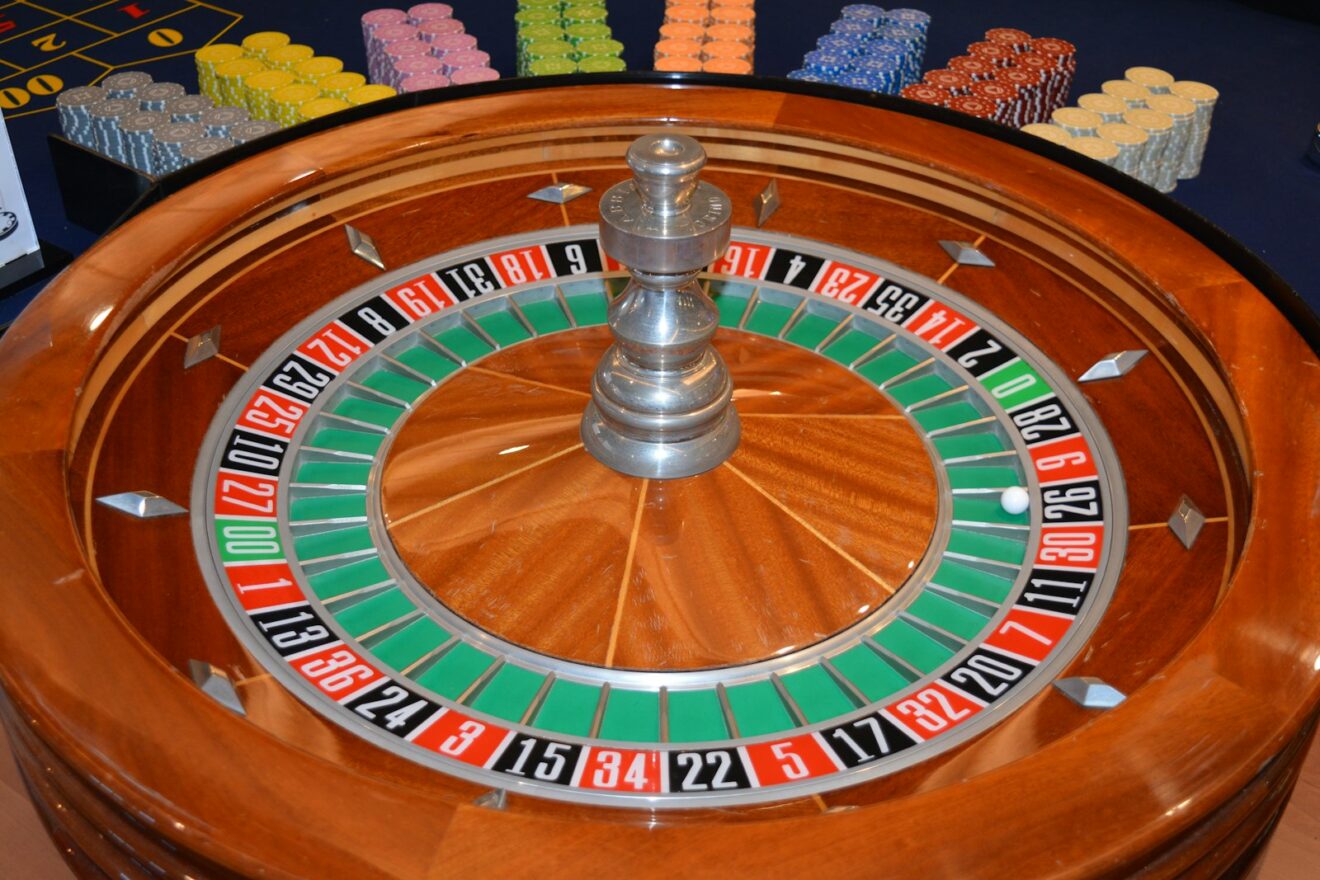
Suppose someone offers you the following "system" for beating a fair coin flip. Bet one dollar on heads. If you win, you're up a dollar — pocket it and start again. If you lose, double your bet to two dollars. Lose again? Double to four. The moment you finally win, your single winning bet recovers every previous loss and nets you the original one-dollar profit. Since you cannot lose forever, you cannot lose. This is the Martingale strategy, possibly the oldest and most famous "guaranteed winning system" in the history of gambling.
It is also, in two very different ways, completely wrong. This article walks through the math that makes it look brilliant, the much less obvious math that makes it useless, and the deep reason — a 1953 theorem of Joseph Doob — that no double-or-nothing system can beat a fair game.
Pick a base stake, say one dollar. Flip a fair coin and bet on heads. Then:
That is the entire algorithm. Two rules, no math required. Its appeal is that any eventual win — no matter how long the losing streak — produces a net profit of exactly one base stake.
Consider a five-in-a-row losing streak followed by a win on the sixth flip, starting with a $1 base stake:
| Flip | Result | Stake | Outcome | Running P/L |
|---|---|---|---|---|
| 1 | Lose | $1 | −$1 | −$1 |
| 2 | Lose | $2 | −$2 | −$3 |
| 3 | Lose | $4 | −$4 | −$7 |
| 4 | Lose | $8 | −$8 | −$15 |
| 5 | Lose | $16 | −$16 | −$31 |
| 6 | Win | $32 | +$32 | +$1 |
The arithmetic generalises immediately. After k losses in a row, your cumulative loss is 1 + 2 + 4 + … + 2k−1 = 2k − 1 dollars. Your next stake — the one that finally wins — is 2k. The win pays you that stake, so your overall result is:
2k − (2k − 1) = +1 dollar
Every winning cycle, no matter how long, ends one base stake up. This is the math that has convinced gamblers since the 18th century that they have discovered a sure thing.
The "+1 profit per cycle" claim quietly assumes you can always place the next doubled bet. That is the assumption that does all the work — and it turns out to be impossible in any realistic setting.
Look at the bankroll required to survive a streak of k losses with a $1 base stake:
| Losing streak | Probability (fair coin) | Bankroll needed |
|---|---|---|
| 5 in a row | 1/32 ≈ 3.13% | $31 |
| 10 in a row | 1/1,024 ≈ 0.098% | $1,023 |
| 15 in a row | 1/32,768 ≈ 0.003% | $32,767 |
| 20 in a row | 1/1,048,576 ≈ 0.0001% | $1,048,575 |
Required capital doubles with every extra step in the streak. To "guarantee" the strategy against a streak of 20 losses you need more than a million dollars in reserve — to "win" a single dollar.
And the probabilities are not as small as they look once you put many cycles together. With about 700 cycles of betting, the probability of seeing a streak of 10 in a row at least once is roughly 50%. Anyone playing the system seriously will eventually face the streak that exhausts their bankroll.
Even if you somehow had infinite money, real casinos do not. Every table has a maximum bet — usually 500 to 1,000 times the minimum. Once your doubled stake exceeds that cap, you can no longer place the bet the Martingale rule requires, and your "guaranteed" recovery collapses into a real loss.
A roulette table that takes $1 minimum and $1,000 maximum lets you place ten bets — doubling nine times — before you hit the ceiling. The probability of losing all ten in a row on a fair 50/50 bet is about 0.1 % per cycle (on a real roulette table, where the green zero makes each red/black bet slightly worse than 50/50, it is higher still) — small per game, but you only need it to happen once across a long evening for the whole accumulated bankroll to vanish.
Our worked example used a fair 50/50 coin. Most real casino bets are not fair — they have a built-in house edge:
For any game with a house edge, every individual bet has negative expected value — and so does any combination of those bets, including the Martingale. The doubling rule changes the distribution of outcomes (most cycles end up +1, but occasionally a catastrophic streak wipes out years of small wins) without changing the underlying expected value. Over long enough play, expected losses are guaranteed.
The deep mathematical reason is a theorem from probability called Doob's Optional Stopping Theorem. Informally:
In a fair game (zero expected gain per bet), no betting strategy — including the Martingale and all its variants — that uses bounded bets and ends in finite time can produce a positive expected profit.
The Martingale's "+1 per cycle" promise only escapes this theorem by violating its assumptions: it requires unbounded bets or infinite time. Take either constraint away and the entire argument quietly collapses.
A historical footnote worth savouring: the name "martingale" comes from 18th-century French gambling slang for the doubling system. Twentieth-century mathematicians — Jean Ville in his 1939 thesis, then Joseph Doob — borrowed that name for the formal concept. In effect, part of modern probability theory was invented to explain exactly why this system cannot work.
The Martingale persists for the same reasons most "easy money" ideas persist:
The pattern — a flashy upside paired with a rare but devastating downside — is now widely studied in finance and risk management. It even has a name borrowed from the original strategy: a martingale-style payoff is one that looks like steady wins with a small chance of total loss. It is generally a warning sign, not a strategy.
The interesting thing about the Martingale is that the math is not hidden — you can watch it fail on a virtual coin in a few minutes. Try this thought-experiment: pick a starting bankroll (say, $1,000), a base stake (say, $1), and a maximum allowed bet (say, $128 — about seven doubles). Now simulate flips with a fair virtual coin — or run a whole evening at once with 100 flips in a single click — and track your balance. Most evenings you will end up a little ahead. A small fraction of evenings, a streak will hit your cap and you will lose far more than every previous evening combined. That asymmetry is the whole story.
For a fuller picture of why long streaks are far more common than they feel, see our companion article on coin-flip statistics and streak theory — short version: a 6-in-a-row streak occurs about 80% of the time within 100 flips, and a 10-in-a-row streak shows up surprisingly often over a long evening's play.
The Martingale strategy looks like a winning system because the arithmetic of any individual cycle works out. It is not a winning system because the probability of needing more capital than you possess — or hitting a table limit, or playing against a house edge — is not zero. A guaranteed system that fails 0.1 % of the time, but fails by an amount that is hundreds of times larger than every previous gain, is not a guaranteed system. It is a delayed loss.
The honest one-sentence summary is the one mathematicians have been quietly repeating since Doob: you cannot turn a fair game into a profitable one by adjusting your bet sizes.
Share this link via






Or copy link