
Share this link via
Or copy link
Bet The Flip (β)
Your current points are 10.
Current win streak: 2
Win streak bonus: x1.5
Which one will you bet on?
How much would you like to bet?
You're betting 3 points on heads.
If you're ready, please tap the button below, and flip your coin!
Result
You Win! You've earned points!
Current points: 10
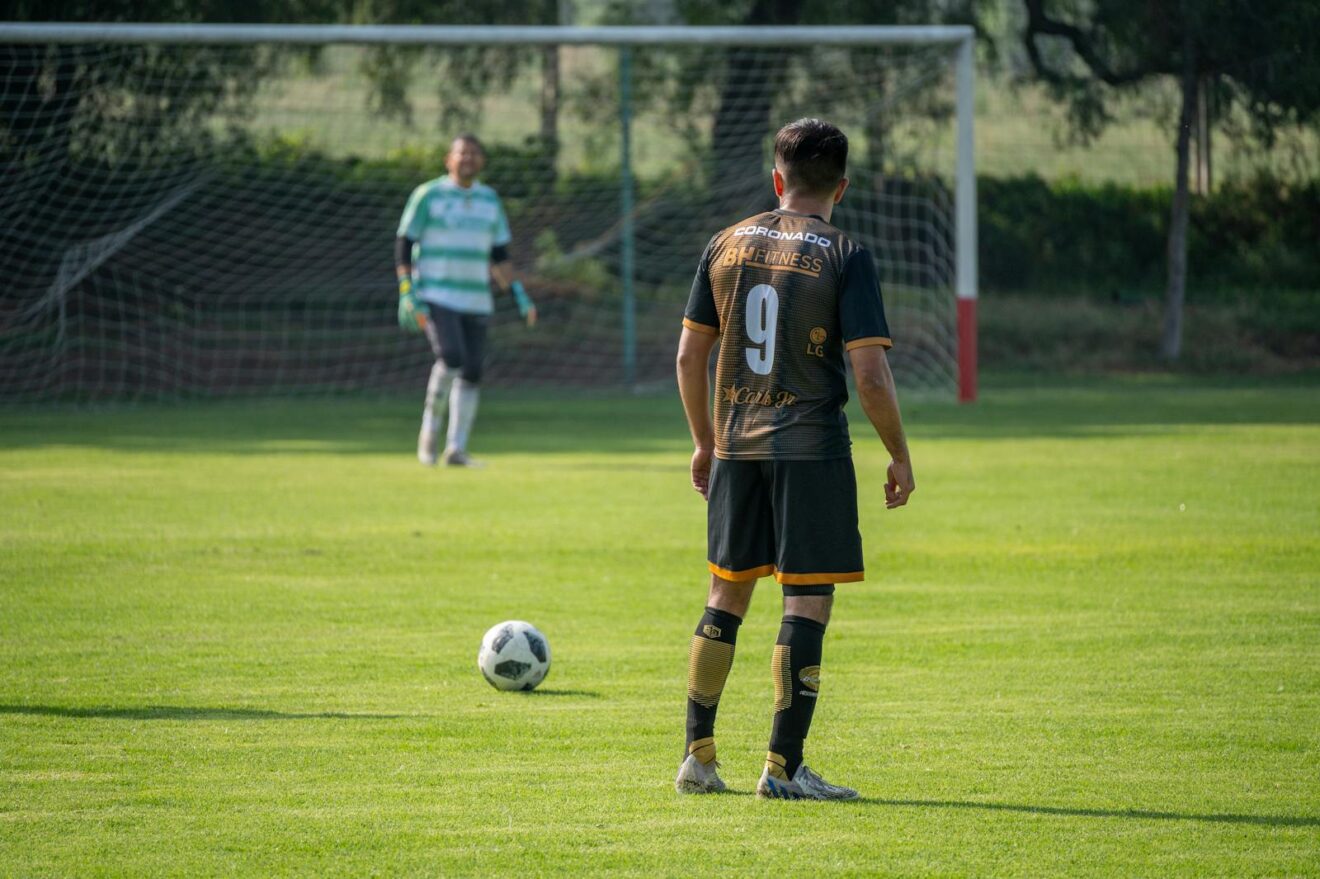
A coin toss before a penalty shootout doesn't look like much. The referee tosses, a captain calls, the toss-winning side picks "first" or "second" — and play resumes. But hidden inside that small decision may be one of the largest measurable advantages in all of competitive sport: in the most-cited academic study of shootouts, the team that kicks first won about 60% of the time.
If that finding holds, the flip of the coin isn't just choreography — it is, with measurable probability, the moment the match was decided. The size of the effect is now debated, but the question of how much the toss matters has occupied economists, statisticians, and football's law-making body for two decades.
Most casual fans only notice one coin toss in a soccer match: the captains and referee at the centre circle before kick-off. Under the current Laws of the Game, the winning captain chooses either which goal to attack in the first half or which side kicks off; the losing captain gets whatever's left. It's a small ritual that decides direction of play and a brief tactical preference.
The pre-shootout tosses, when they happen, are much more consequential. Tied at the end of extra time? Before the penalty shootout begins, the coin comes out twice more. First the referee tosses to decide which goal will host the kicks — the captains do not choose it (the referee may move the kicks to the other goal only for safety or pitch reasons). Then the referee tosses a second time, and the captain who wins that toss makes the choice that matters: whether their team kicks first or second.
That kick-order choice is the one researchers have argued moves the win probability by a significant amount.
The most influential research on shootout fairness comes from economists Jose Apesteguia and Ignacio Palacios-Huerta. Their 2010 paper in the American Economic Review examined a sample of professional shootouts and found a striking imbalance: the team kicking first won roughly 60% of shootouts, the team kicking second roughly 40%. Palacios-Huerta later expanded the dataset in his 2014 book Beautiful Game Theory, reporting consistent results across about 1,001 shootouts from international and domestic competitions.
A 60/40 split is large in practical terms: the first kicker wins roughly 1.5 times as often as the second kicker. For what's meant to be a coin-flip tiebreaker, that was an arresting result, and it framed the public conversation for the next decade.
If the first-kicker advantage were really around 20 percentage points, every captain in the world would always pick first when given the choice. They don't always — and follow-up research has tempered the headline.
A 2012 paper by Martin Kocher and colleagues reanalysed an extended sample of about 540 shootouts and found a first-kicker win rate closer to 53% — statistically indistinguishable from a fair 50/50. A 2025 large-sample study by economist D. Pipke (Kiel Institute, published in the Journal of Economic Psychology) examining roughly 7,000 shootouts reports essentially no first-mover advantage at all.
The fairest summary today is something like: in some samples — particularly the early elite-tournament data Palacios-Huerta studied — a substantial first-kicker advantage shows up. In larger and more recent samples, that advantage shrinks to roughly nothing. Whether the effect is real but small, or an artefact of the original sample, remains an open empirical question.
What's not debated is captain preference. Apesteguia and Palacios-Huerta surveyed a sample of professional and semi-professional players and coaches; roughly 96% said they would choose to kick first if they won the toss. Pressed for the reason, almost all cited the same intuition: by scoring first, your team forces the opponent into a "match or fall behind" situation. The asymmetry of pressure, the argument goes, is what tilts the result.
If 96% of toss winners pick first, and the first-kicker win rate is truly 60%, the toss matters a lot. Run the numbers and the toss-winning team can expect to win about 59% of shootouts, the toss-losing team about 41% — an 18-percentage-point gap in expected outcome, decided before a single ball is kicked.
Penalty kicks themselves are nearly random: at the top professional level, the conversion rate hovers around 75–80% regardless of order (in-game penalties typically convert around 78–82%; shootout penalties slightly lower — see Bar-Eli et al., Journal of Economic Psychology 2007, and FIFA tournament data). Any first-kicker advantage isn't about physics; it's almost certainly about psychology. When team A scores its first penalty, team B's first kicker is now under the pressure of "match it or fall behind." Miss, and the deficit feels immediate.
The pressure is not symmetrical. A first kicker who scores moves the score from 0–0 to 1–0, a low-pressure routine kick. A first kicker who misses just leaves the door open. The second kicker carries the cost of their teammate's success or the burden of recovery from their teammate's failure. Over hundreds of shootouts, that asymmetry — if it exists — compounds into a measurable swing.
If first-kicker advantage is real and psychological, a natural fix is to scramble the order so the pressure rotates. Instead of the traditional alternating order:
A → B → A → B → A → B → A → B → A → B
both teams take pairs of kicks in a balanced sequence:
A → B → B → A → A → B → B → A → A → B
This pattern is called the ABBA method, and it should be familiar to tennis fans: it's the standard order of serves in a tiebreak. The pairing means that after the first kick, no team is ever asked to "catch up alone" — each kicker faces roughly the same situational pressure as the opposing kicker who preceded them.
Soccer's law-making body, IFAB, authorised an experimental trial of the ABBA shootout format in 2017. Trials were actually conducted by UEFA at the U-17 and U-19 European Championships, and by the FA in the Community Shield and EFL (League) Cup. The hope was a measurable reduction in the first-kicker advantage. The results disappointed: the data did not show a clear improvement, and referees, broadcasters, and players reported the order was confusing. At its November 2018 business meeting, IFAB formally discontinued further ABBA trials. The traditional ABAB method remains the rule.
Whether ABBA failed because the psychological effect is more subtle than expected, because the trial sample was too small, or simply because — as the 2025 study suggests — the original asymmetry was overstated, remains an open question.
The kick-off coin toss in a 0–0 group stage match is mostly ceremonial. The coin toss before a penalty shootout, by contrast, is a moment that has occupied economists, statisticians, and IFAB for twenty years. The next time you see the captains gather at the centre circle before penalties, watch which one calls, which one wins, and what they choose. If they pick "first" without hesitation, they're behaving like 96% of the players who've been asked.
For a closer look at how a single random binary outcome can sit at the centre of a championship, see our companion piece on seven famous coin tosses that changed sports history. And if you want a more general view of how the simple 50/50 came to settle disputes across cultures, see the history of coin flipping.
If you ever need to settle who kicks first in a five-a-side, or who takes the strikes in a backyard penalty shootout, you don't need a referee. Flip a virtual coin — it's the same 50/50 that has been deciding tournament outcomes for over fifty years. Just remember which side you call.
Share this link via






Or copy link