
Share this link via
Or copy link
Bet The Flip (β)
Your points10
Win streak 2
Bonus ×2
Which one will you bet on?
How much would you like to bet?
You're betting 3 points on Heads.
Place your bet, then flip the coin!
Result
Your points10
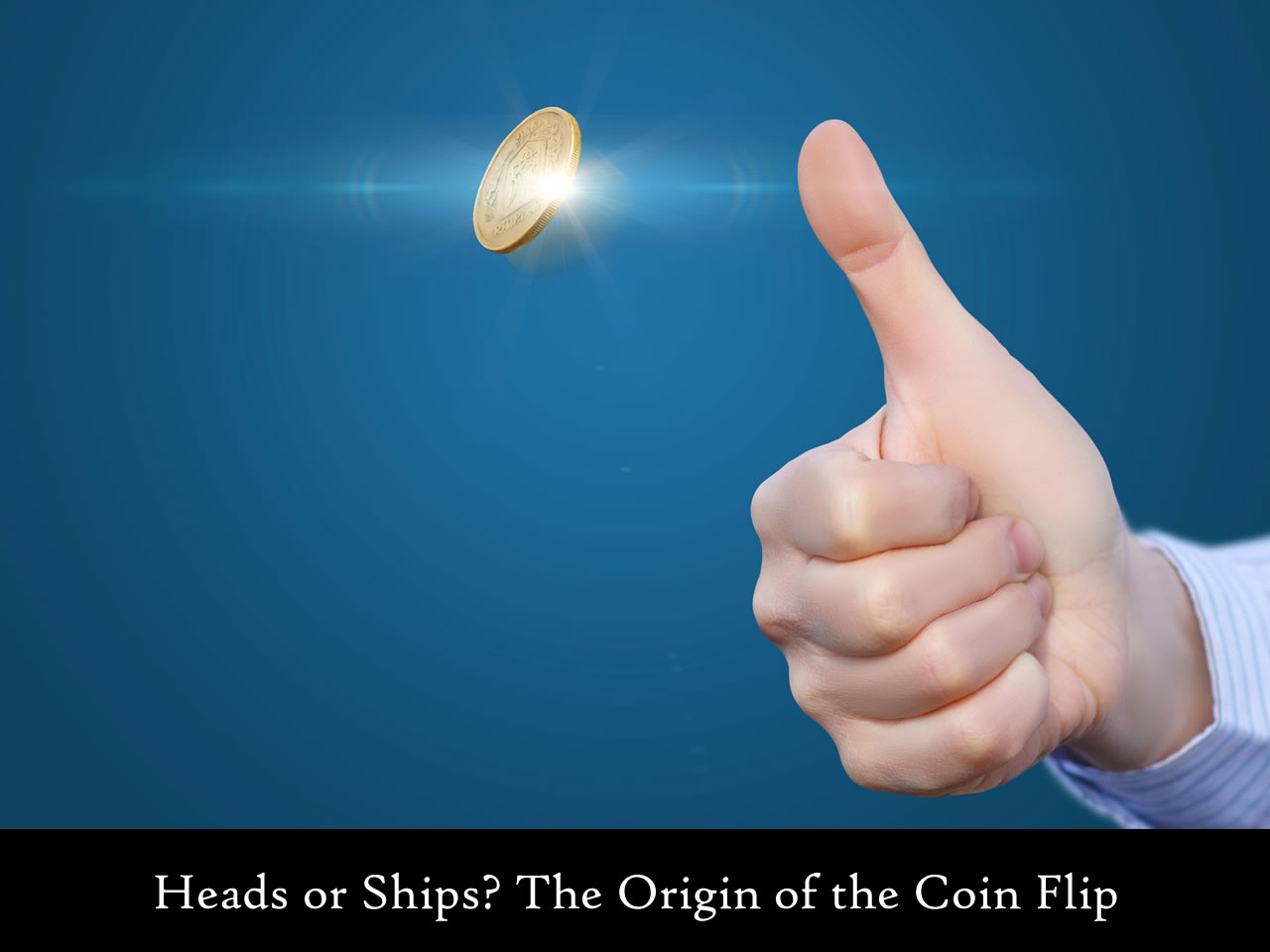
A group of friends is playing a pickup game of basketball. Which team gets first possession? This can easily be decided by the flip of a coin –‘Heads or Tails?’– leaving it up to chance.
Coin tossing is a simple yet universal way to make big or small decisions. Ranging from small events such as ‘who gets to do laundry today?’ to big events like ‘who got the first pick in the NBA draft?’ — a coin flip decided it until 1984 — the flip of a coin can be used to decide virtually anything. This leads to the question, who started it all? The trail leads back to Ancient Rome, where a writer of the 5th century AD describes boys tossing coins and calling “heads or ships.”
A coin flip (or coin toss) is the act of throwing a coin into the air and letting whichever side lands facing up decide between two options. One person calls a side — heads or tails — while the coin is in the air; if it lands on the called side, they win. Because a fair coin gives each side an essentially equal chance, the flip has served for centuries as a fast, impartial way to settle a choice.
The phrase is also used figuratively: when something is “a coin flip,” the outcome is a pure 50/50 — as likely to go one way as the other.
When a coin lands on heads, the side showing the portrait or main design — the obverse — is facing up after it settles. The opposite side is the reverse, or “tails.” If you called heads before the toss, a coin that lands on heads means you won the flip. And as you’re about to see, calling one side “heads” is far older than the English word — Roman boys were already shouting capita.
The earliest description of a coin-toss game that we have been able to check is Roman. The game was known as ‘Heads or Ships’ — in Latin, ‘capita aut navia’ — after the images on the old Roman bronze coin: the head of Janus (the two-faced god) on one side and a ship on the other. Macrobius, the writer who records the game, explains the ship as a reminder that Saturn (the god of agriculture) had arrived by ship.
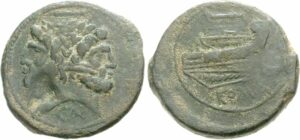
Roman bronze coin depicting Janus, the two-faced god (Patton 2018, Princeton Index of Medieval Art — see References)
In his Saturnalia (Book I, chapter 7, section 22), written in the 5th century AD, Macrobius says that Janus was the first to strike bronze coins, with his own head on one side and a ship on the other, to keep alive the memory that Saturn had arrived by ship. He then adds:
“Aes ita fuisse signatum hodieque intellegitur in aleae lusum, cum pueri denarios in sublime iactantes capita aut navia lusu teste vetustatis exclamant.”
In plain English: that the bronze was struck this way “is understood even today in the game of chance, when boys throwing coins up into the air shout ‘heads or ships’ — the game bearing witness to antiquity.”
Three limits are worth stating. The story of Janus and Saturn is a legend, not minting history. The game is attested in Macrobius’s own day, not earlier. And the passage says nothing about gods deciding the outcome, about omens, or about official decisions.
Source: Macrobius, Saturnalia I.7.22. Latin text as transcribed at la.wikisource, compared with the text of the printed Teubner edition (Eyssenhardt, 1893) on the Internet Archive. The English translation is ours.
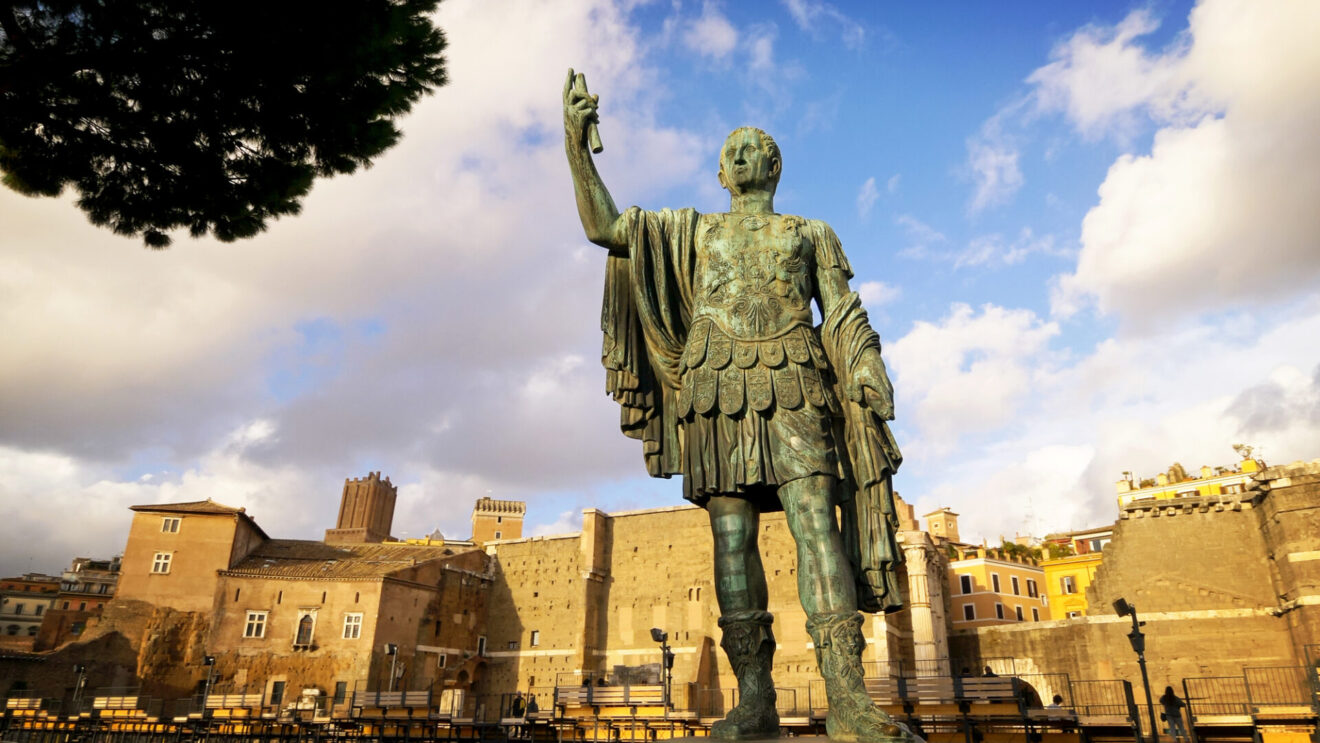
Statue of the dictator Julius Caesar along Via dei Fori Imperiali at the Roman Forum in Rome, Italy
In 44 BC, Julius Caesar became the first living Roman whose portrait appeared on Rome’s coinage — an honor granted by the Senate. (His portrait went on silver denarii; the bronze coin the game is named for kept its Janus-and-ship design.) Popular accounts claim that coin flips later decided civic matters under the emperors — guilty/not-guilty rulings, marriage permits, even questions of war — but we found no ancient source for these stories, and nothing in Macrobius links Caesar’s portrait to the game.
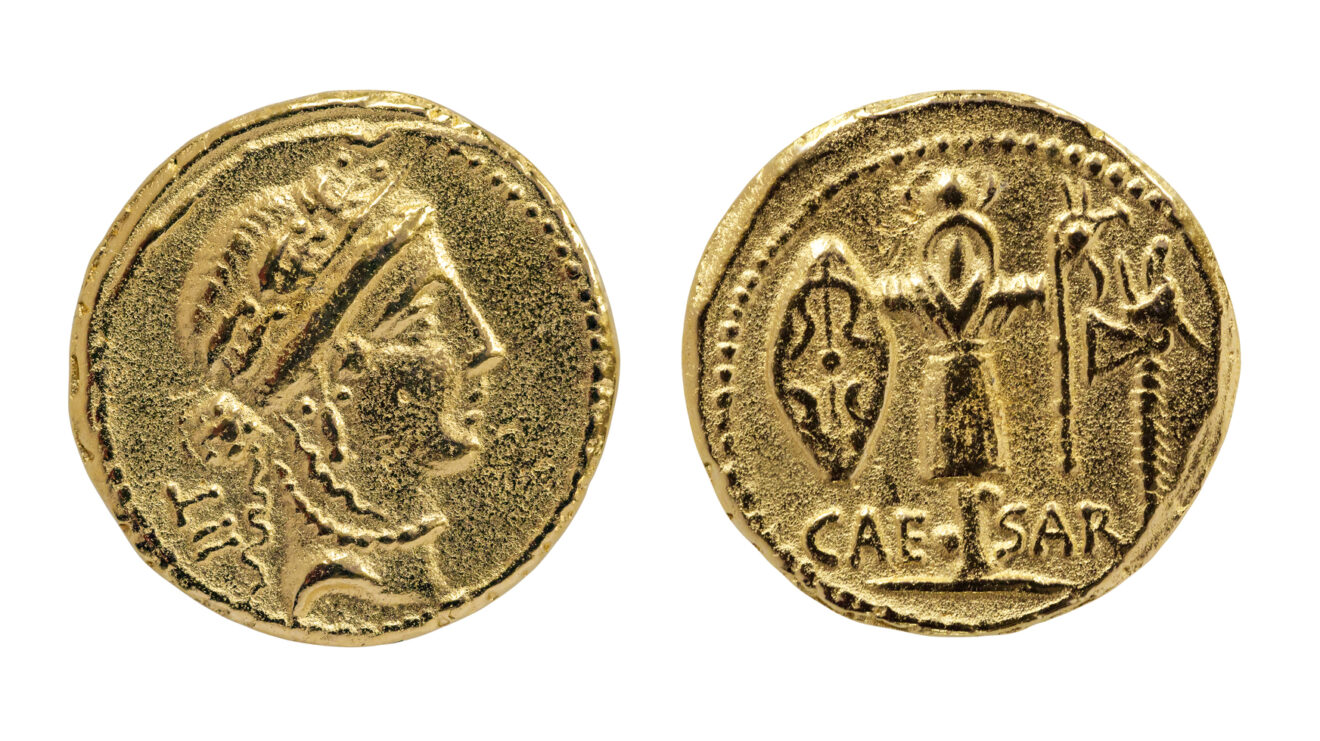
Roman Aureus Gold Coin of Julius Caesar with a probable portrait of the goddess Venus and a Trophy of Gallic Arms on the reverse struck between 48-47 BC cut out and isolated on a white background.
Macrobius describes the toss as a game of chance played by boys. The Roman bronze coin itself went through many reforms over time, with changes in materials and size. Yet he says that in his own day the call was still ‘capita aut navia’ — a name he ties to the old bronze coin.
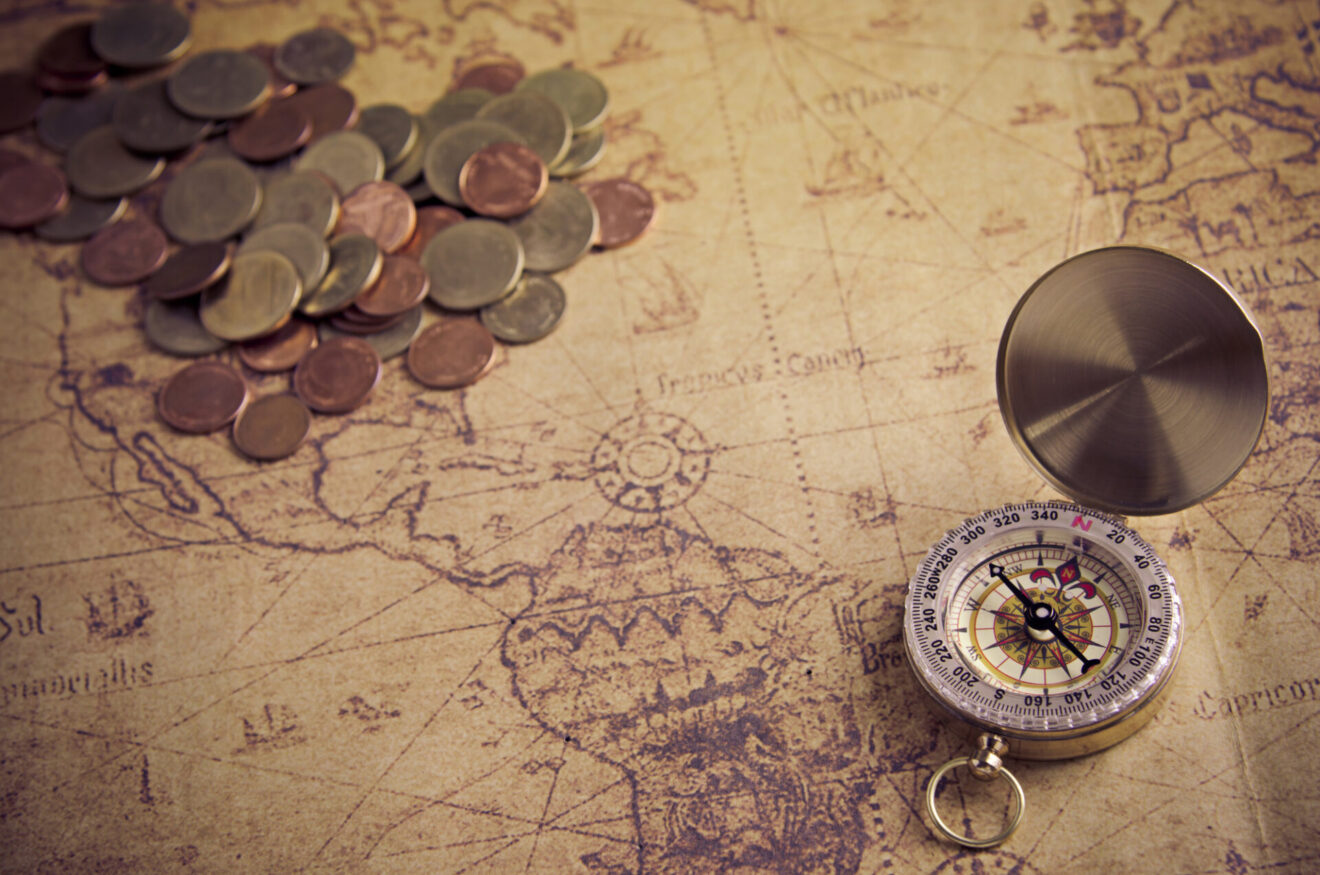
Vintage compass and coins on old map
This is what we know so far about the origins of the coin toss. Some theories suggest that the practice might’ve even started in Ancient Greece. Perhaps more evidence will come to the surface, or we might never know for sure. Nevertheless, it is amazing that we as humans have continued to keep the tradition alive since ancient times. The practice is even celebrated in the United States, marking June 1st as ‘Flip a Coin Day’.
Whether we are superstitious or not, deciding on a coin toss is a way to remove some burden off ourselves and leave it up to chance. Even after Roman times, important decisions such as elections, the naming of cities, and the first airplane flight have been decided by a coin toss — many of these moments are collected in our companion article on the history of coin flipping.
The Romans needed a bronze coin. You just need one tap. Flip a coin now — Heads or Ships, the choice is yours.
Share this link via





Or copy link